World History · Trading expedition
The Exchange Atlas
Lead a trading expedition across seven connected stops. Pack a limited hold, plan for the wind, deliver cargo, and use discoveries to complete an evidence atlas.
Learning goal & teacher directions
Learning goal: Use evidence to explain how trade routes carried goods, ideas, technologies, and disease without treating every place as having the same experience.
- Check destination, cargo capacity, provisions, and wind before traveling. Students can recover from low supplies and revise their route.
- Discover the local evidence at each stop. Delivery progress alone does not complete the learning objective; the atlas requires supported claims.
- The route and travel costs are a fictional game model, not a reconstruction of exact historical journeys. Discuss the model limits at the end.
Progress saves in this browser when browser storage is available. It is not a student profile. No names are needed. Use the feedback and closing questions to discuss the reasoning behind a decision.
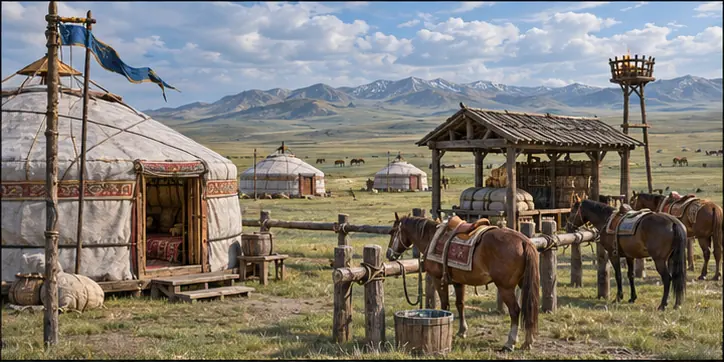
A World History expedition
The Exchange Atlas
Deliver the cargo. Trace the connections. Leave a map you can defend.
All three cargo orders are packed. You can leave supplies behind to lighten the caravan, or begin with the full load.
One crate uses one space. Two provisions use one space.
Change the load
Leaving crates at the depot saves provisions, but you will need to return for them.
A map is more than a line.
Three communities are waiting for cargo. Along the way, gather observations about the historical trade networks and work out which claims they can support.
You choose the connections, manage the load, and decide when a longer route is worth taking.
2 cloth cratesto Oasis stop
2 raw material cratesto Art workshop
2 food cratesto Sea harbor
The cargo orders, costs, map, and model days are invented. The observations contain the historical evidence. No countdown; you can revise the atlas.
Course connections
Reviewed NC references: WH.G.1.2
Voluntary national references: D3.3.9-12
Compare the activity’s scope with your own course requirements. These connections identify practice opportunities; they do not establish full standards mastery or a match for every state.