When somebody tells me an instructional strategy is research-based, I want to know what the research actually measured. Student achievement? Retention? Reading comprehension? The ability to apply information independently? Those are different outcomes, and I don't think we should treat them as interchangeable.
“I learn better when I can just look back at my notes.” “I learn better when the teacher tells me exactly what is going to be on the test.” “I’m a visual learner.” “I don’t learn from quizzes.” “I understand it better when I just reread it.”
A good class roster can make a teacher look awfully good. I'm sure that statement won't sit well with everyone, particularly those who take pride in their students' academic success. But I think we've gotten a little too comfortable praising teachers for results without questioning how much of that success was already there before the students entered their classrooms.
A teacher can hand the same assignment to twenty-five students and assume everyone received the same task. They didn’t. One student sees “Use evidence to explain why this empire became powerful” and already knows roughly what the finished answer should look like.
One of the strangest things about teaching is that I can see almost everything a student is doing and still have very little idea what is happening in their mind. I can see the Chromebook open. I can hear the discussion. I can watch someone highlight a reading, fill in notes, answer questions, move around the room, make a presentation and stay busy for an entire class period.
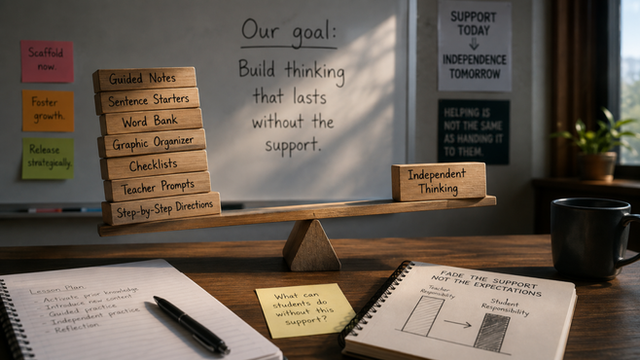
There is a moment in teaching that is easy to misread. A student has been successful for weeks. They have completed the work, used the organizer, followed the checklist, answered the questions, maybe even improved their grade. Then one small thing changes.